• UGM Portal
  • Academic Portal
  • Simaster
  • Webmail
  • Training programme
  • English
    • English
    • Bahasa Indonesia
Universitas Gadjah Mada Master in Urban and Regional Planning
Universitas Gadjah Mada
  • About
    • Vision & Mission
    • Accreditation
      • International
      • National
    • Community
      • Academic Staff
      • Suppoting Staff
      • Student Association
      • Alumni
    • Quality Assurance
      • Lecture Evaluation
    • List of Partners
  • Program
    • Our Programs
    • Master By Coursework
    • Master by Research
    • Double Degree Program
      • Double Degree Program – University of Groningen
    • Training Program
    • Academic Calendar
  • Students
    • Reregistration
    • Publication
    • E-Resources
    • SIMASTER UGM
  • International
    • International Student Arrival
    • Student Life
      • Study in Yogyakarta
  • Campus Life
    • Facilities
    • Cloud Printing
    • UGM IT Services
    • UGM Library
  • LINK
    • OIA UGM
    • Faculty of Engineering
    • OIA Faculty of Engineering
    • Library Faculty of Engineering
    • Undergraduate Program in Urban and Regional Planning
    • Department of Architecture and Planning
    • Master Program in Architecture
    • Doctoral Program in Architecture
    • PSPPR UGM
  • Home
  • Agenda-en
  • Strengthening City Identity: UGM Urban Planning Experts Provide Strategic Inputs for Tulungagung Urban Corridor Grand Design

Strengthening City Identity: UGM Urban Planning Experts Provide Strategic Inputs for Tulungagung Urban Corridor Grand Design

  • Agenda-en
  • 29 April 2026, 14.25
  • Oleh: mpwk
  • 0

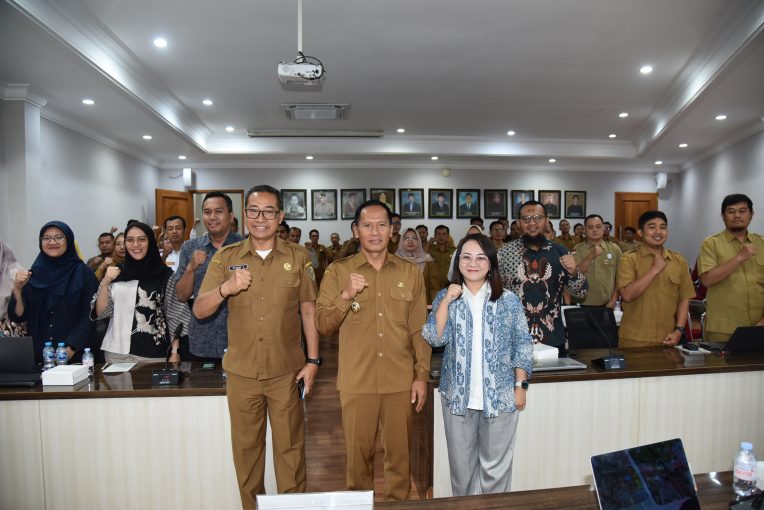
TULUNGAGUNG – The Tulungagung Regency Government, in collaboration with the Master of Urban and Regional Planning (MPWK) program at Universitas Gadjah Mada, held a Focus Group Discussion (FGD) for the Preliminary Report on the Tulungagung Urban Corridor Grand Design on Monday, April 27, 2026, at the Bappeda Office. This meeting aimed to formulate the direction for sustainable aesthetic and functional development of street corridors by involving various stakeholders, ranging from technical agencies to historical communities and MSMEs. The involvement of the UGM expert team is expected to provide an applicable academic perspective to strengthen the regional character of Tulungagung.

During the forum, the UGM academic team provided critical notes on the importance of rediscovering the city’s authentic identity as a basis for branding. The UGM lecturers highlighted that Tulungagung historically has strong roots as the “Marble City,” a reputation already well-known in export markets; thus, this identity needs to be reinforced so that urban development remains consistent and rooted in real history. Beyond formulating a branding strategy, the expert team also emphasized the need for corridor mapping that is complementary rather than competitive, taking into account the carrying capacity and different operational hour scenarios suited to the character of each area.

Regarding socio-economic and infrastructure aspects, inputs from UGM academics focused on the arrangement of the informal sector or street vendors (PKL) to ensure good accessibility and visibility without sacrificing pedestrian rights or environmental cleanliness. Furthermore, the UGM team encouraged cross-sector integration to highlight the value of 135 Indische-style Cultural Heritage (CB) buildings along the main corridors. They suggested that the historical value of these buildings be highlighted visually as an educational medium for the younger generation, while simultaneously revitalizing physical activities within these historic districts.

The holistic preparation of this plan serves as a tangible realization of commitment to the Sustainable Development Goals (SDGs), particularly SDG 11 (Sustainable Cities and Communities) through efforts to preserve cultural heritage and provide inclusive public spaces for people with disabilities, the elderly, and children. The arrangement of the informal sector, which prioritizes accessibility, also aligns with SDG 8 (Decent Work and Economic Growth) by supporting the competitiveness of local MSMEs. Finally, the collaboration between the local government and educational institutions strengthens SDG 17 (Partnerships for the Goals), ensuring that urban transformation in Tulungagung is based on a synergy of expertise to achieve global sustainable development targets.

Tags: SDG 11 : Sustainable Cities and Communities SDG 17 : Partnerships for the Goals SDG 8 : Decent Work and Economic Grwoth

Leave A Comment Cancel reply

Your email address will not be published. Required fields are marked *

*

This site uses Akismet to reduce spam. Learn how your comment data is processed.

Recent Posts

  • Strengthening City Identity: UGM Urban Planning Experts Provide Strategic Inputs for Tulungagung Urban Corridor Grand Design
  • Warid Zul Ilmi’s journey reflects the spirit of the Master by Research pathway at MURP UGM.
  • MURP Students Achieve Recognition at the 2025 Aksinomi Sulampua Scientific Forum
  • MPWK UGM Student Wins Awards at the International Conference on Planning for Equitable and Sustainable Urbanization (ICPEU) 2025
  • MPWK UGM Student Selected as Delegate for Youth Townhall Road to Y20 Indonesia 2025
Universitas Gadjah Mada

Master in Urban and Regional Planning

Department of Architecture and Planning

Faculty of Engineering, Universitas Gadjah Mada

Jl. Grafika No. 2, Sekip, Yogyakarta 55281

   mpwk@ugm.ac.id
   +62 (274) 580095; 580101
   +62 (274) 580052

© 2019 Master Program in Urban and Regional Planning

KEBIJAKAN PRIVASI/PRIVACY POLICY